
Cricket Formats Explained: Test, ODI and T20 — What Is the Difference?
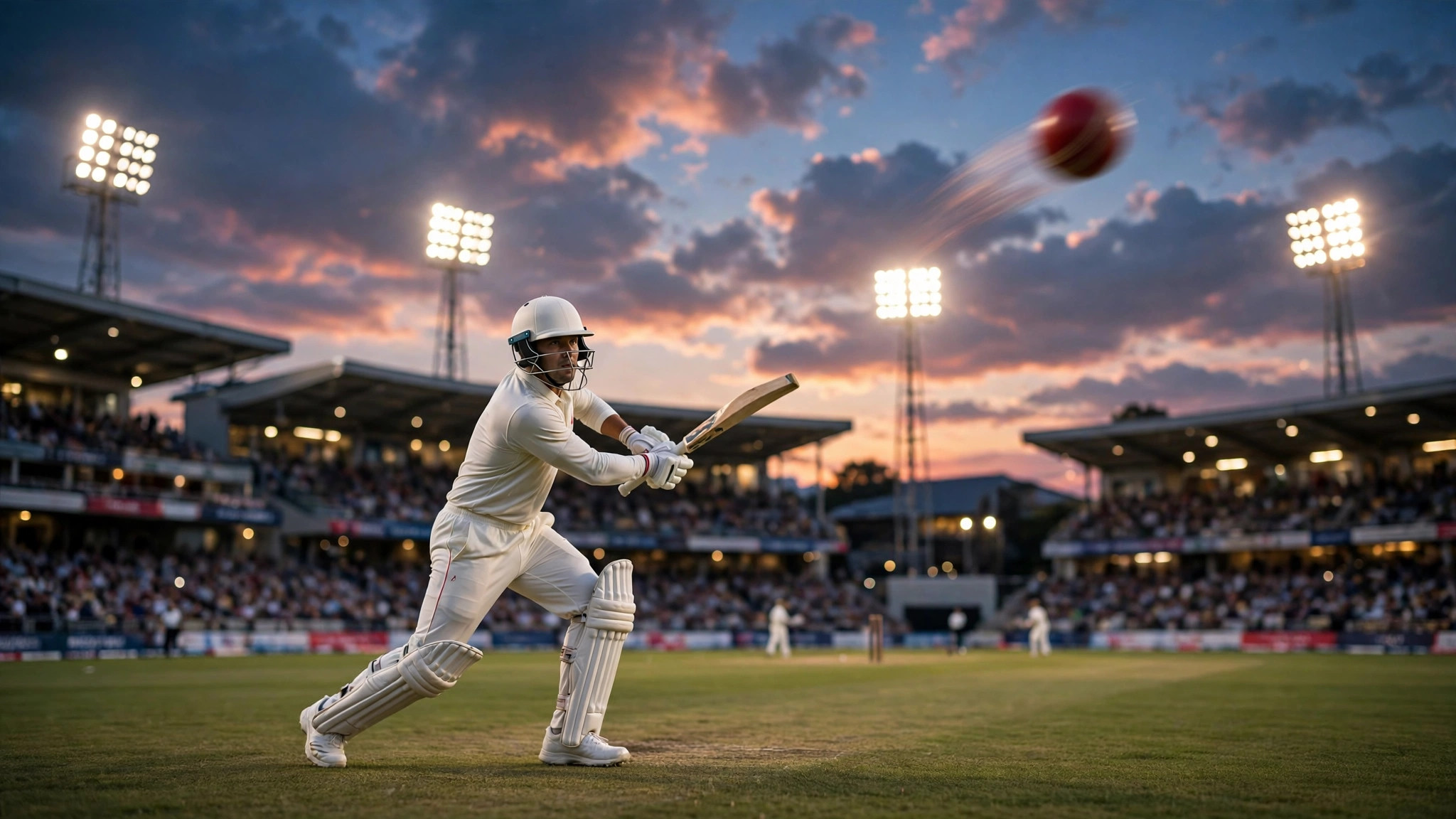
Cricket formats confuse newcomers more than anything else about the sport, because cricket is really three games wearing the same clothes. A Test match can last five days and end in a draw. A one-day international squeezes everything into a single afternoon and evening. A T20 is over in about three hours, roughly the length of a football match with a half-time show. All three use the same basic contest — bat, ball, wickets, runs — but the time available changes every decision a captain makes, and it is why the same player can look cautious in one format and fearless in another.
Test cricket is the original and longest form. Two teams bat twice each, in what are called innings, over a maximum of five days, with around ninety overs bowled per day. There is no limit on how long a team can bat, so the game becomes a test of patience, technique and endurance. Bowlers work in long spells trying to wear batters down. Batters build innings over hours. Because time is finite, a team that cannot force a result may have to settle for a draw, and that possibility shapes the tactics: declarations, follow-ons and fourth-innings chases against the clock are all unique to this format. Many players still call it the purest examination of a cricketer.
One-day internationals, or ODIs, give each team a single innings of fifty overs. Every bowler is limited to ten overs, fielding restrictions apply in blocks of overs called powerplays, and a white ball is used so the game can be played under floodlights. The fifty-over format, created to guarantee a result in a day, produced cricket’s World Cup and some of its most famous matches. Batting strategy follows a rhythm: build a platform early, accelerate through the middle, and launch at the end. A score that was considered huge in one decade becomes ordinary in the next, because batters keep finding new gears.
T20: the cricket format built for the evening crowd
Twenty20 cricket cuts each innings to twenty overs. Bowlers can deliver a maximum of four overs each, so captains need at least five bowling options. Almost every ball is an event: batters attack from the first over, fielders patrol the boundary to save singles, and matches regularly go to the final over. Franchise leagues built around this format now run all over the world, drawing huge crowds and television audiences, and they have changed how the sport earns its money. Skills from T20 — slower balls, switch hits, pinpoint yorkers — have flowed back into the longer formats and changed them too.
How cricket formats change the way teams play
The simplest way to feel the difference is to watch how a batter approaches the same bowler in each format. In a Test, leaving the ball alone outside off stump is a skill in itself; a batter might score twenty runs in an hour and be applauded for it. In an ODI, that same patience would waste deliveries the team cannot get back. In a T20, survival for its own sake barely exists — the currency is boundaries, and a batter who is not scoring is usually retired out or replaced by someone who will swing. Captains think differently too: Test captains manage bowlers across days, T20 captains manage them across minutes.
The formats also crown different kinds of teams. The fifty-over version sits at the centre of the international calendar through the World Cup, whose qualification and knockout structure we break down in our guide How Does the Cricket World Cup Work? Points, Net Run Rate and Knockouts. Test rankings reward consistency over years, while T20 rankings can turn on a single hot month.
All three formats are governed internationally under playing conditions set by the sport’s world body ICC, which also organises the global tournaments for each version. Players sign different contracts, train for different demands and build careers that may span all three or specialise in just one.
None of the three is the “real” cricket to the exclusion of the others. They are answers to the same question asked at different speeds: how do you score more runs than the opposition before your resources run out? Once you see that, switching between a five-day Test and a Friday-night T20 stops feeling like changing sports — it feels like changing tempo.
If you are choosing which format to watch first, let the occasion decide. A T20 is the perfect introduction — one evening, constant action, and every rule visible in a single game. An ODI suits a long Sunday, with room for momentum to swing several times. A Test match rewards dipping in and out across days, following the slow build of pressure the way you would follow a novel. Many grounds and broadcasters also experiment with day-night Tests under lights, played with a pink ball, which has brought evening crowds to the longest format without changing its essential character.
[…] the live table ball by ball. If the concept of rates and averages is new to you, our primer Cricket Formats Explained: Test, ODI and T20 — What Is the Difference? explains how the fifty-over game itself is […]
[…] to hit. Run through those three gates — the same basics that separate formats in our explainer Cricket Formats Explained: Test, ODI and T20 — What Is the Difference? — and the next thunderous appeal will look a lot less mysterious. You may not agree with the […]