Basketball Positions Explained: What Each Player Actually Does
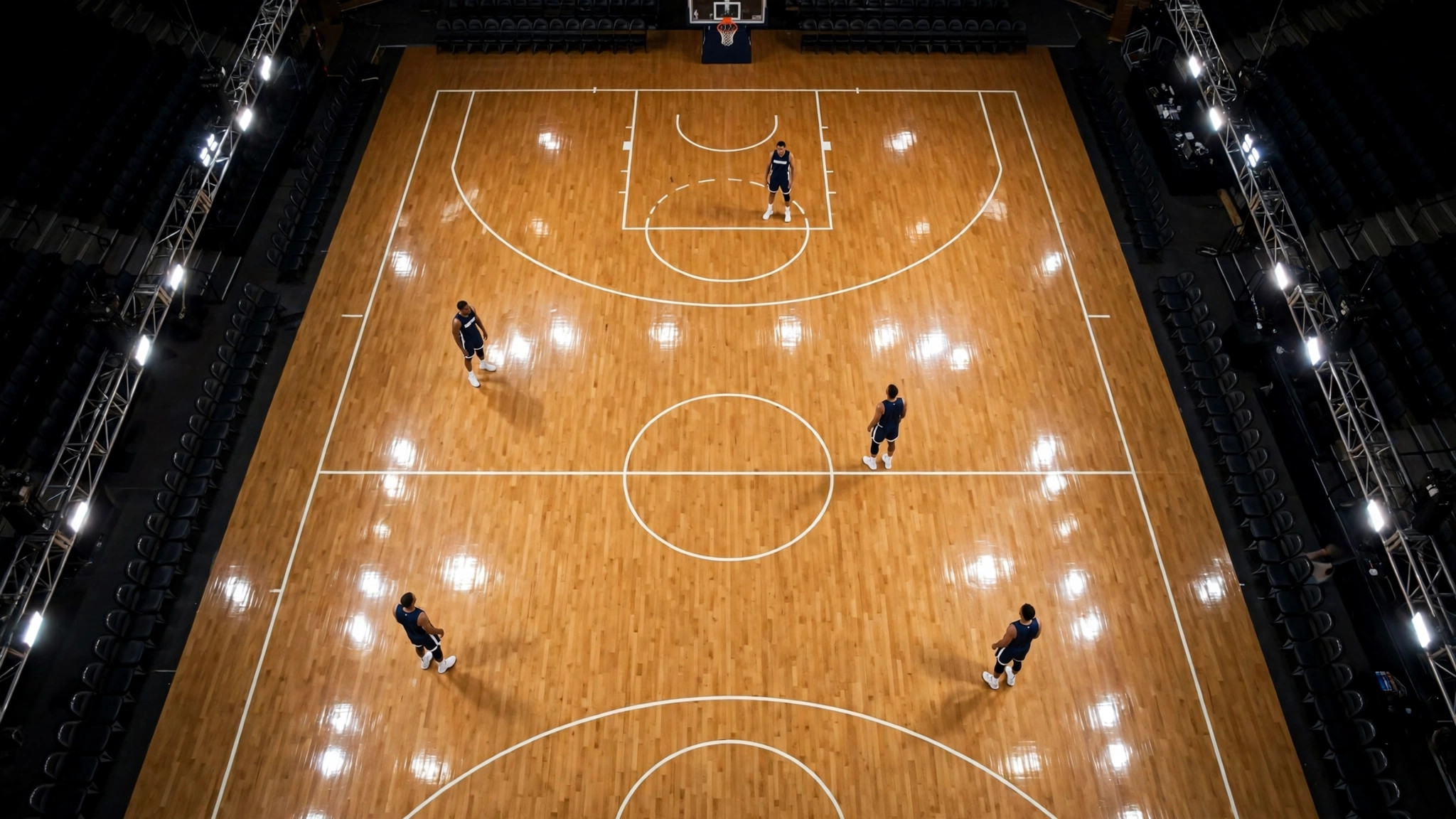
Basketball positions are the easiest way to understand what is happening on the court, even though modern players blur the old labels more every season. Five players per team take the floor, and tradition divides them into five roles, numbered one to five: point guard, shooting guard, small forward, power forward and center. Each role grew out of a simple division of labour — who brings the ball up, who shoots from outside, who battles near the basket. Learn what each job involves and the chaos of a fast break resolves into a pattern you can read.
The point guard, the “one”, is the team’s organiser. Usually the smallest and quickest player, the point guard dribbles the ball up the court against pressure, calls the plays, and decides where the offence goes. Think of them as a quarterback: their first job is distribution, finding the open teammate with a pass rather than hunting their own shot. The great ones control the tempo of the whole game, speeding it up after defensive rebounds and slowing it down to protect a lead. On defence they guard the opponent’s ball-handler, the first line of pressure.
The shooting guard, the “two”, is typically the team’s best perimeter scorer. They work away from the ball — sprinting around screens, relocating to the corners, ready to catch and shoot from three-point range. In many offences the shooting guard is also a secondary ball-handler who can create a shot when the play breaks down and the shot clock is dying. Defensively they chase the other team’s most dangerous outside scorer, which makes the position one of the most physically demanding in the sport.
The frontcourt: where basketball positions meet size and power
The small forward, the “three”, is the most versatile role in basketball. Small forwards are usually tall, athletic wings expected to do a bit of everything: score from all three levels, defend the opponent’s best wing, rebound, and sometimes run the offence themselves. The game’s biggest stars often play here precisely because the job description is “everything”. If a team has one player who fills every column of the statistics sheet, it is usually the small forward.
The power forward, the “four”, traditionally played close to the basket: setting screens, rebounding, scoring in the post and protecting the paint alongside the center. The modern power forward also shoots threes and guards smaller players on the perimeter, a transformation so complete that many now look like taller small forwards. Still, the core duties remain physical ones — box out, contest shots, and give the team a second interior presence.
The center, the “five”, is traditionally the tallest player, anchored near the basket. Centres protect the rim on defence, blocking and altering shots; set the solid screens that free guards; and score close to the hoop with hooks, dunks and put-backs. On offence the whole geometry of a team is built around where the center stands, because defenders must respect them. Some modern centres pass like guards or shoot from deep, but the job’s foundation is unchanged: own the paint.
These roles matter most when you watch how teams are built and how playoff series are won, a context we explore in How Do the NBA Playoffs Work? Play-Ins, Series and the Finals. The positions are defined in the game’s laws and competition structures maintained by the sport’s international federation FIBA, though coaches have always treated them as starting points rather than cages.
That is the key final point: positions describe responsibilities, not restrictions. A center who can shoot is still a center if they protect the rim. A point guard who scores thirty is still running the team. Watch a game and ask of each player, “What is their main job on this possession?” — within a few minutes, the five roles will be as clear as positions on a football pitch, and the beautiful improvisation on top of them will make far more sense.
Why basketball positions still matter in the modern game
You will often hear that modern basketball is “positionless”, and there is truth in it: offences spread the floor with five shooters, centres bring the ball up, and guards rebound like forwards. But the label describes freedom, not the absence of jobs. Somebody must still initiate the offence, somebody must still protect the rim, and somebody must still take the hardest defensive assignment — the positions have become verbs rather than nouns. Coaches draft and trade with the old framework quietly in mind, because a roster of five identical wings has nobody to guard a dominant center in a playoff series. The numbers one to five remain the fastest shorthand for those responsibilities, and broadcasts still introduce line-ups by them. Learn the jobs first; then you can appreciate how thrilling it is when a player breaks the mould.