
Offside Rule Explained: The Simple Guide Every Fan Needs
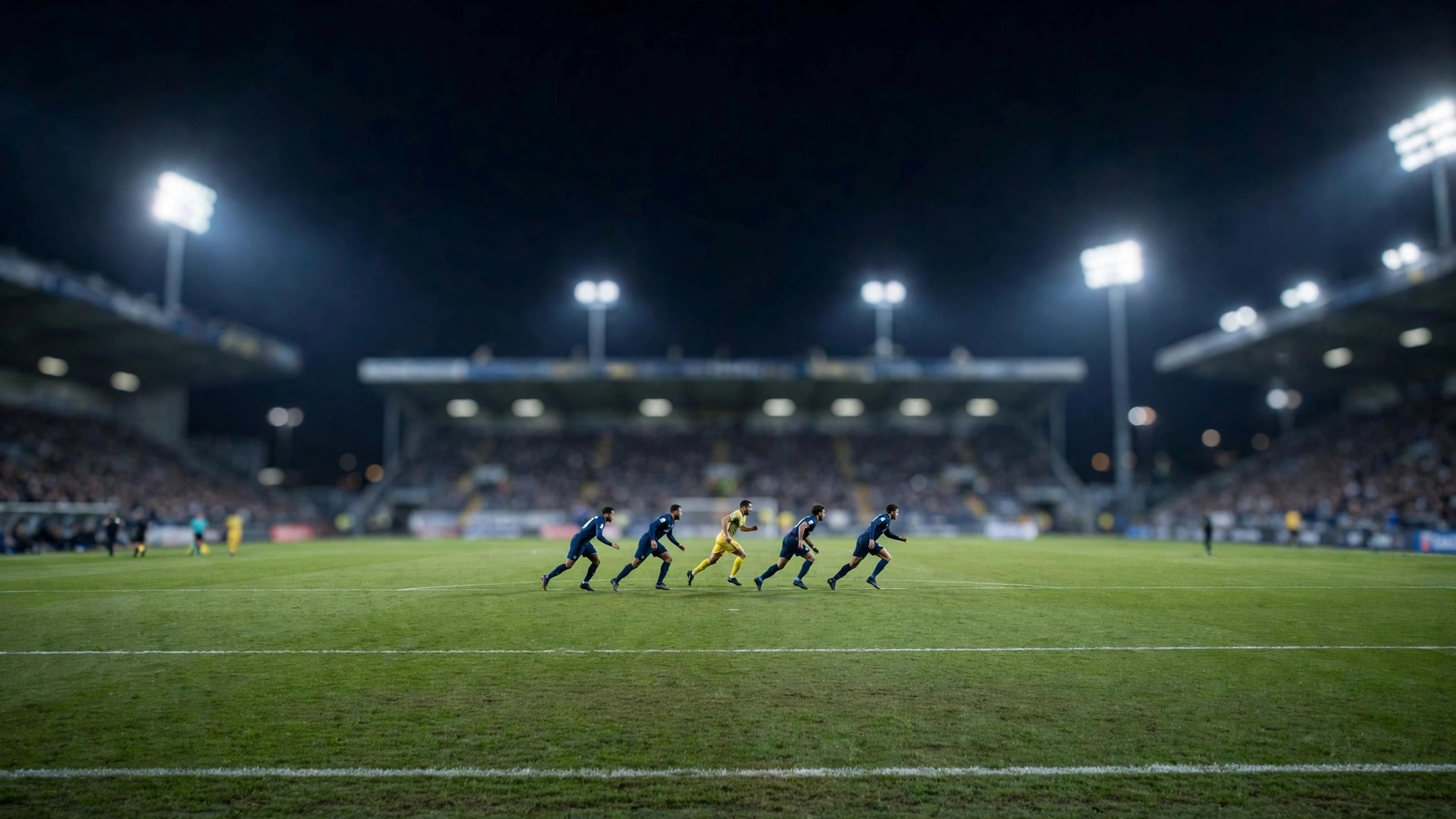
The offside rule is the one law in football that everybody has an opinion about and surprisingly few people can explain word for word. It causes more arguments in living rooms and pubs than any other decision a referee makes, yet the idea underneath it is simple. Offside exists to stop attackers from simply waiting next to the opponent’s goal for the ball to arrive. Without it, football would turn into a long-ball contest with strikers camped in the penalty area. With it, the game has shape, timing and the beautiful tension of a perfectly timed run.
Here is the basic definition. A player is in an offside position if any part of their head, body or feet is in the opponents’ half and closer to the goal line than both the ball and the second-last opponent. That second-last opponent is usually the goalkeeper plus one defender, which is why you will hear commentators talk about the defensive line. Being in an offside position is not an offence by itself. A player is only penalised when they become involved in active play — receiving the ball, challenging an opponent, or blocking a goalkeeper’s view — at the moment a teammate plays the ball forward.
The timing is the part most people miss. Offside is judged at the instant the ball is played by a teammate, not when it arrives. A striker can be a metre beyond the last defender when the ball reaches them and still be perfectly legal, as long as they were level or behind when the pass was struck. This is why great forwards bend their runs, starting behind the line and bursting through as the ball is released. Defenders, in turn, practise stepping up together as a unit — the offside trap — to catch attackers a fraction too early.
When the offside rule does not apply
There are clear situations where a player cannot be offside at all. Nobody can be offside in their own half of the pitch. Nobody can be offside when they receive the ball directly from a goal kick, a throw-in or a corner kick. And a player who is behind the ball when it is played — for example, running onto a cut-back from the goal line — is never offside, because the ball itself is the reference point. These exceptions reward teams that work the ball into advanced positions properly instead of just launching it forward.
You may also hear about a player being offside in the build-up but the goal standing because a defender deliberately played the ball. The laws draw a line between a deliberate play, which resets the situation and can put an attacker back onside, and a deflection or rebound, which does not. A save by the goalkeeper counts as a deflection, so a striker pouncing on a parried shot can still be flagged if they were beyond the line when the original shot was taken.
How VAR changed the offside rule
Modern football has added technology to this old law. Video assistant referees check every goal, and in major competitions semi-automated systems track players’ limbs to draw the lines with remarkable precision. The result is goals ruled out by a toe or an armpit, decisions that are technically correct but feel harsh to fans. Officials judge offside by any playable part of the body, so a leaning shoulder can be enough. If you enjoy understanding how fine margins shape tournaments, our explainer How Does the Football World Cup Work? Format, Qualification and Knockouts Explained shows how these moments decide who lifts the trophy.
The law is maintained by the game’s lawmakers and applied worldwide under the Laws of the Game published with guidance from FIFA. Referees and assistants run thousands of these judgements a season, and the assistant on the far touchline, flag in hand, is watching the defensive line, the ball and the passer all at once.
The easiest way to remember it all is this: watch the moment the pass is played, count back two opponents including the goalkeeper, and ask whether the receiver was beyond them. Everything else — traps, delays, VAR lines — is decoration on that single idea. Learn to see it, and half the arguments in football suddenly make sense.
One modern twist regularly confuses supporters: the delayed flag. Assistant referees are now instructed to keep their flag down when an attack is promising and the decision is tight, letting play continue so that VAR can review the outcome afterwards. If a goal is scored, the check decides whether it stands; if the move breaks down, the flag may still go up. It looks indecisive in the stadium, but it exists because a wrong flag used to kill clear chances that technology could have rescued. Knowing this, you can watch the assistant instead of the striker: no flag does not always mean onside — it often means the decision has simply been postponed until the attack ends.